INTERVIEW
Authors Against Book Bans Fights Censorship
by Alison A. Trotta
Books are a vital bedrock of society. Sometimes, reading a good book provides an escape from life. Other times, it holds up a mirror and lets us see ourselves. Further still, a book can help us understand someone else. Books are the best of humanity, artifacts for who we are as a society and, perhaps, who we could be.
In this day of unfounded fear and loud protests from a few small minds about one book or another, it is essential for people to stand up against book bans. For authors, the fight is both necessary and purposeful. Please read on for my interview (lightly edited for style and content) with Katherine Locke, president of Authors Against Book Bans (AABB), and Kelly Jones, a librarian and a board member of AABB.
—Alison A. Trotta, managing editor
|
For those who don’t know, what prompted the organization’s founding?
Katherine Locke: AABB was founded in 2024 by a group of authors who realized that there was a real need for an organization that elevated and centered author and illustrator voices in the fight against book bans. We provide training and support to authors who are fighting book bans locally, at the state level, and, increasingly, at the national level. We also provide support for authors facing bans, organize letter-writing campaigns and phone campaigns, and work with our Freedom to Read coalition partners across the country to stop and repeal book bans and to pass freedom to read legislation. You can learn more about us at authorsagainstbookbans.com.
Tell me a little bit about why you got involved—was there a particular moment when you knew you needed to?
Kelly Jones: I joined AABB as soon as I learned about it. I’m a former public librarian (I worked in children’s services and selection), so I already had training in and experience with defending intellectual freedom. But I didn’t really understand the current wave of censorship until one of my own books was soft-banned in 2022. It’s a funny story about a girl taking care of some chickens that have superpowers, and it was pulled from a school district along with an entire diverse books collection.
Facing a book ban as an author was a completely different experience. I didn’t have policies to turn to or colleagues in the fight with me. It was gut-wrenchingly personal to have the years of work and love that I’d poured into that book treated like that. It was even more devastating to imagine the kids going into their school to find that all of those new books about kids like them—people in their community—had disappeared. I didn’t know what to do. But I knew that other authors were facing much more difficult situations, far more frequently. I didn’t want any of us to have to face that alone, so I decided to step up.
KL: I joined AABB as soon as it went public for membership in spring 2024 and was quickly roped into being a regional leader for Pennsylvania alongside Alex London and then Jordan Sonnenblick, two amazing Pa.-based children’s authors. I knew I needed to get involved because I [had seen] the book ban rhetoric rise to historic levels early in the pandemic, and I absolutely felt lost and unsure of what role I could play, beyond defending my own books. Serving as a regional leader was incredibly fulfilling, and I am so glad that I had that experience before I joined the national board in January.
I think a lot of people—both bookish people and non-bookish people—have this idea that book bans happen “elsewhere.” Not in their state. Or their community. No matter how their community votes, “it doesn’t happen here.” But what I’d learned as an author, very quickly, is that book bans are happening everywhere. In 2023, a library director in Connecticut stepped down in protest after town officials interfered with library policy over displaying my book, What Are Your Words? A Book About Pronouns, illustrated by Anne (Andy) Passchier. In spring 2025, a school district in a relatively affluent district outside of Philadelphia banned three books and only reversed the policy after public outcry and moving testimony from students and recent graduates. I share these examples because it does happen everywhere, not just in Texas and Florida. We need to fight book bans everywhere, including Texas, Florida, Utah, and other states where it might feel like an uphill fight, but there are dedicated, organized volunteers from across the literary community doing the hard work.
Is there anything on the agenda for 2026–2027 in particular that you’d like folks to know about?
KJ: AABB members are involved with Freedom to Read legislation efforts in several states. We bring our expertise and our convictions to these conversations, as well as our perspectives as small-business owners threatened by censorship. If you’re considering a legislative push or an advocacy day that fits with our mission, please reach out to us.
KL: AABB is stepping onto the national stage this year in response to multiple pieces of federal legislation that would result in book bans, including H.B. 7661, H.B. 2616, H.B. 8705, and now S.B. 4925. Raising our national profile, working alongside national coalition partners, and defending the freedom to read from attacks that erode our First Amendment rights is a vital part of our work this year.
Additionally, with midterms coming up, we have our eye on how candidates stand on book bans, the freedom to read, and passing legislation for or against that fundamental freedom.
We’ll also be growing the organization internally and externally. We hired our first program and operations manager, Shaneé Yvette Willis, who comes from the library world and has a deep background in helping advocacy organizations in the literary world broaden the impact of their programs. I’m excited for what’s to come.
What are your (small or broad) goals?
KJ: Supporting authors and illustrators who are facing censorship, certainly, and our legislative work. But I’d also like to find more ways for us to work with and to support libraries and schools in this fight. For example, we’re building a list of authors who are willing to be Banned Books Week speakers, and one of our chapters is helping to create a series of similar short videos. As another example, I’ve been invited to speak on banned books panels with librarians. I can help show the audience that this isn’t just a library concern, and I can talk about some of the ways we can support them as readers. Libraries have decades of experience in this fight, but they shouldn’t have to do it all alone. Just like writers need to know that schools, libraries, and readers value their books and fight for them.
KL: I’d really like to build more partnerships within this coalition and strengthen our membership engagement. We have a broad membership base—if your name is on the front cover of a book, you’re welcome to join, and membership is free!—including children’s book authors, adult fiction authors, academics, poets, graphic novelists, indie authors, traditionally published authors, [and] audiobook narrators. There are so many ways to get involved, big and small, and opportunities to volunteer—and this will take everyone. The push for federal legislation for book bans is dangerous, and the fact that they’re introducing multiple bills with similar language shows how serious they are about passing it. The effect on our schools and libraries, [which are] foundational educational institutions in the U.S., would be unprecedented and deeply damaging to students, readers, and communities. So, I really want to find pathways and opportunities for everyone to join the fight.
How can people get involved if they’re not in the writing community?
KJ: By paying attention to what’s happening with books and libraries in their community and in this country and by supporting the freedom to read. Make sure your local and federal lawmakers and your school and library boards know that you believe books that have been chosen by schools and libraries should be available for families and readers who want them. Buy, borrow, and share the books you love, books that matter to you and to your community, and be aware of how difficult it can be to create those books and make them available for everyone. If you believe in our work and want us to do more, you can support us by donating here: authorsagainstbookbans.com/donate.
KL: Exactly what Kelly said. We often only speak up when something goes wrong. Be proactive. Talk to your library boards and school boards and tell them that inclusive literature is important to you, that the freedom to read matters to you, and that you are committed to protecting the freedom to read in your library system and in your school district. Ask how you can support them. Attend school board meetings and library board meetings and be a friendly face that supports their work—and spread the word. Talk about it with your friends and your community. Don’t assume everyone knows about book bans and what’s happening right now.
Is there anything else you want your fellow writers to know?
KJ: Don’t stop writing. Don’t abandon your ideas. Write and illustrate the stories you need to tell—maybe the ones you needed as a reader. You’re the only one who can find the courage to create them. But remember that you don’t have to protect them alone.
KL: We will win this fight. I believe that. It’ll take all of us, and we’re going to need to be persistent and loud, but we’re going to win this. Storytelling is an innately human characteristic. It’s how we learn and grow together. Everyone deserves stories that reflect them, and everyone deserves stories that reflect the world around them. It is our right to express ourselves, to read what fulfills us, and to share that with others. We have to fight for every single book, or we’ll lose all of them. Join us at authorsagainstbookbans.com to get involved.
|
AND A BIT OF FUN! |
What are you reading right now?
KJ: I just finished Ode to the Half-Broken by Suzanne Palmer (so great!), and I’m re-listening to Platform Decay by Martha Wells, narrated by Kevin R. Free. I read widely, and I love sarcastically funny, grounded [sci-fi] with found family. (Tell me what else I should read!)
KL: I just finished The Fight of Our Lives: AIDS in America by David Levithan (fellow and founding AABB board member) and Gabriel Duckels, and Land by Maggie O’Farrell. Both were excellent. Now I’m doing some book research for my next book, so I’m buried under a pile of research books—which is my favorite. I love researching.
Favorite books from your childhood?
KJ: The Hoboken Chicken Emergency by Daniel Pinkwater, the Moomin books by Tove Jansson, Howl’s Moving Castle by Diana Wynne Jones, and the Frog and Toad series by Arnold Lobel.
KL: Madeleine L’Engle and Jane Yolen had an outsized impact on me as a writer. A Wrinkle in Time, A Wind in the Door, the Pit Dragon series, and The Devil’s Arithmetic were hugely influential on what I write now. I reread Katherine Paterson’s Bridge to Terabithia and Jacob Have I Loved many times. I was also a classic Animorphs kid (I thought I was an Animorph) and reread Anne of Green Gables many times.
Which writers have influenced you the most?
KJ: Daniel Pinkwater’s quirkiness and heart, Diana Wynne Jones, and Terry Pratchett’s takes on grounded, practical magic, and the way Hilary McKay writes families with problems that don’t define them are all foundational for my stories.
KL: The aforementioned Madeleine L’Engle, Jane Yolen, Katherine Paterson, [and] K.A. Applegate were influential on me as a writer. I also think that contemporary colleagues like V.E. Schwab, Neon Yang, Tasha Suri, Kacen Callender, Erin Morgenstern, and Marie Rutkoski have really shaped how I’ve grown as a storyteller.
What’s your favorite currently banned book?
KJ: So many—the list of my favorites that aren’t being banned would be much shorter, sadly. And Tango Makes Three by Justin Richardson and Peter Parnell, illustrated by Henry Cole, is one of my personal favorites that reminds me how far we’ve come (There were no sweet, warm books about gay families in my childhood library, penguin or otherwise.) and how we still struggle to keep books for everyone in our communities (It’s still frequently banned.).
KL: I loved Ollie in Between by Jess Callans, which has been challenged right here in Pennsylvania. I’d also put Damsel by Elana K. Arnold on that list. I think about that book all the time. It’s been a few years since I read it, but it lives rent-free in my head. I also want to shout out Ways to Make Sunshine by Renée Watson here too, which I loved and I frequently give as a gift and stock in my local Little Free Libraries. I think that’s something that people don’t realize about book banners: They’re often threatened by joy, especially books that present Black joy and queer joy. The more we can celebrate and uplift these books, the more we can share that joy and be louder than the haters. |
|






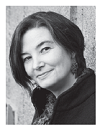
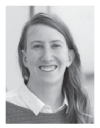 Katherine Locke [L] (they/them) is an award-winning and critically acclaimed author for all ages, including picture books (such as What Are Your Words? A Book About Pronouns, Bedtime for Superheroes, and Being Friends With Dragons), middle grade titles (such as This Is Our Rainbow, Gender Rebels, and Athlete Is Agender), and young adult titles (such as This Rebel Heart, Loki: Journey Into Mystery, and the Balloonmakers duology). They have three cats, one horse, and a lifelong love of chai lattes. They can be found online at

